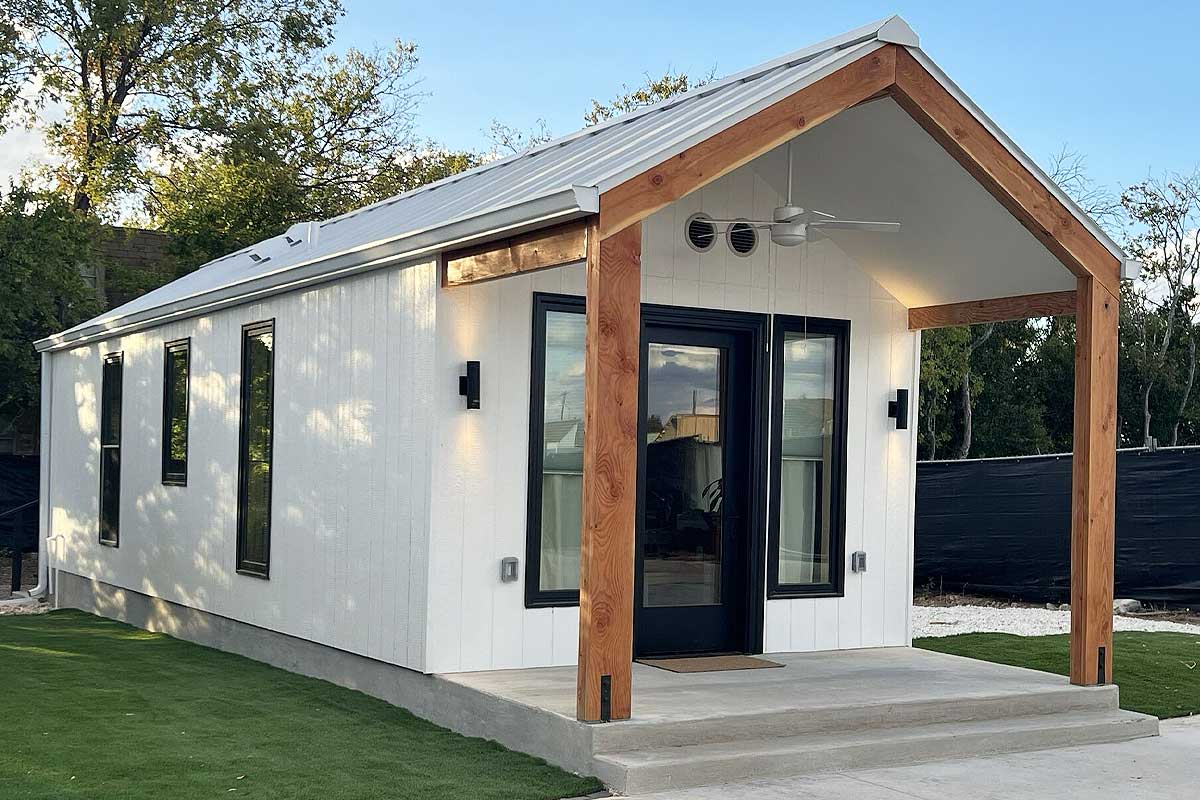
Introduction: Why IKEA Is Entering the Tiny House Market
The tiny house movement is booming worldwide. Faced with housing crises affecting both North America and Europe, more and more people are turning to compact, economical, and sustainable housing solutions. In this context, IKEA's entry into the market is hardly surprising: the Swedish furniture giant, globally renowned for making design accessible to everyone, brings its unique vision of functional living to the forefront.
The IKEA tiny house of 34 m² (approximately 366 square feet) represents far more than a simple architectural project. It's a statement of intent: proving that it's possible to design a complete, comfortable, and aesthetically pleasing home within a reduced footprint, at a cost that makes it accessible to the broadest possible audience. This project, born from a close collaboration between IKEA U.S.'s sustainability department and the architecture firm WestEast Design Group in San Antonio, Texas, embodies the brand's core philosophy — democratic design applied to housing.
In this comprehensive guide, we explore every aspect of this tiny house: its design, interior layout, furniture choices, price estimates, and availability prospects in the United States and Canada. Whether you're a tiny house enthusiast, an investor, or simply curious, this in-depth feature gives you all the keys to understanding this groundbreaking project.
The Origins: IKEA × WestEast Design Group
The project was officially unveiled in late 2024. The first house was built in San Antonio, Texas, as part of an ambitious pilot program aiming to produce 200 tiny houses in total. These homes are initially intended to provide a permanent, affordable shelter for people experiencing homelessness — a major social challenge in the United States and beyond.
What sets this project apart from many other social housing initiatives is the deeply human approach adopted from the very beginning. Before a single blueprint was drawn, the IKEA and WestEast Design Group teams conducted extensive consultations with future residents. Their essential needs — safety, privacy, comfort, dignity — were placed at the heart of every architectural decision.
WestEast Design Group, based in San Antonio, brings invaluable local expertise. Specializing in sustainable and community-focused architecture, the firm successfully translated IKEA's values into a concrete design adapted to the Texan climate yet universal enough to be replicated in other regions around the world.
Key Project Facts
- Floor area: 34 m² (approximately 366 sq ft)
- Pilot program: 200 homes planned in San Antonio, Texas
- Partners: IKEA U.S. (sustainability) + WestEast Design Group
- Approach: co-designed with future residents
- Goal: affordable, sustainable, and dignified housing
- First build: completed late 2024
Design and Architecture of the 34 m² Home
Designing a complete home in just 34 m² (366 sq ft) demands exceptional architectural mastery. Every square inch must be justified, and every design choice must serve both functionality and the well-being of the occupants.
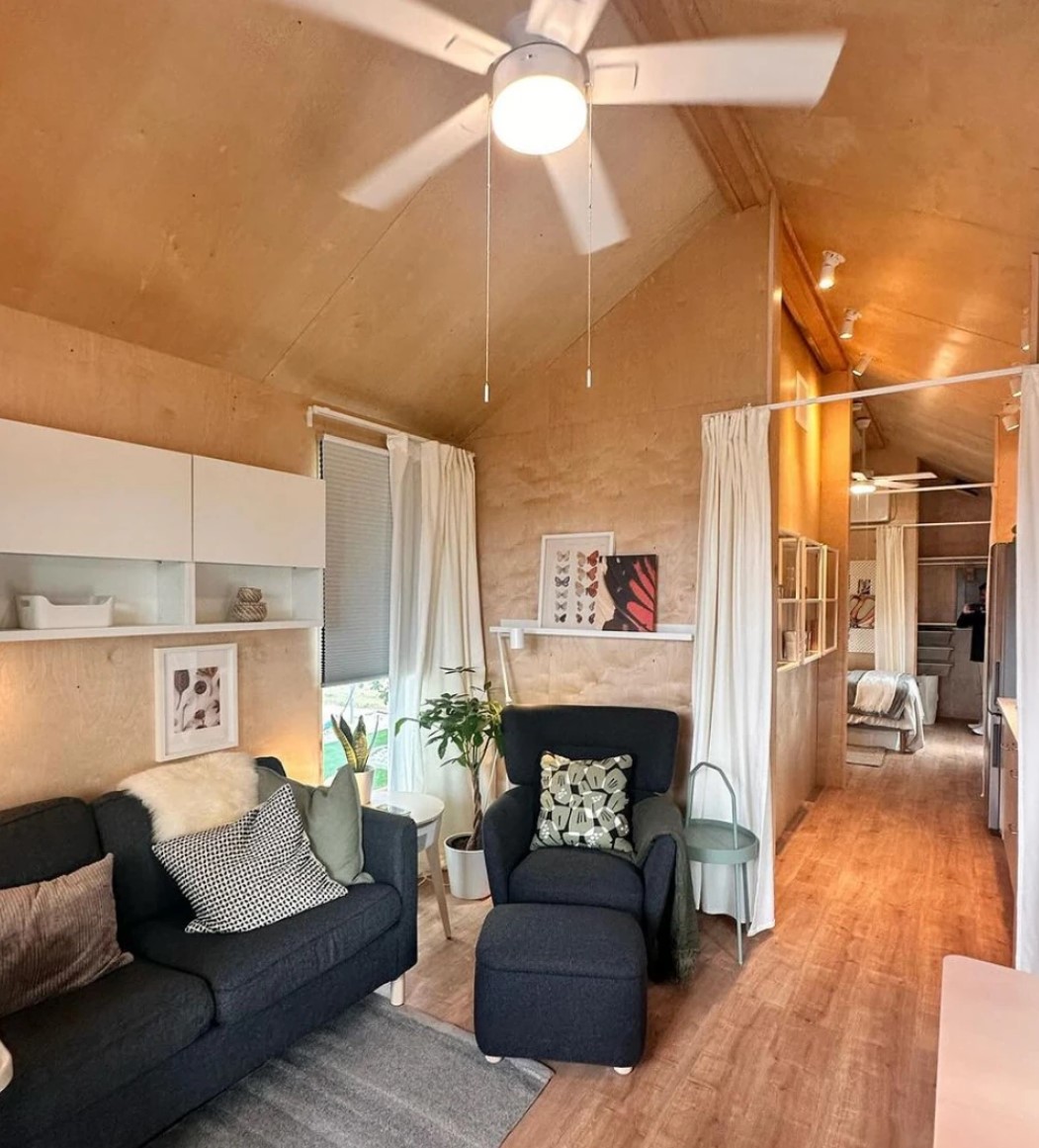
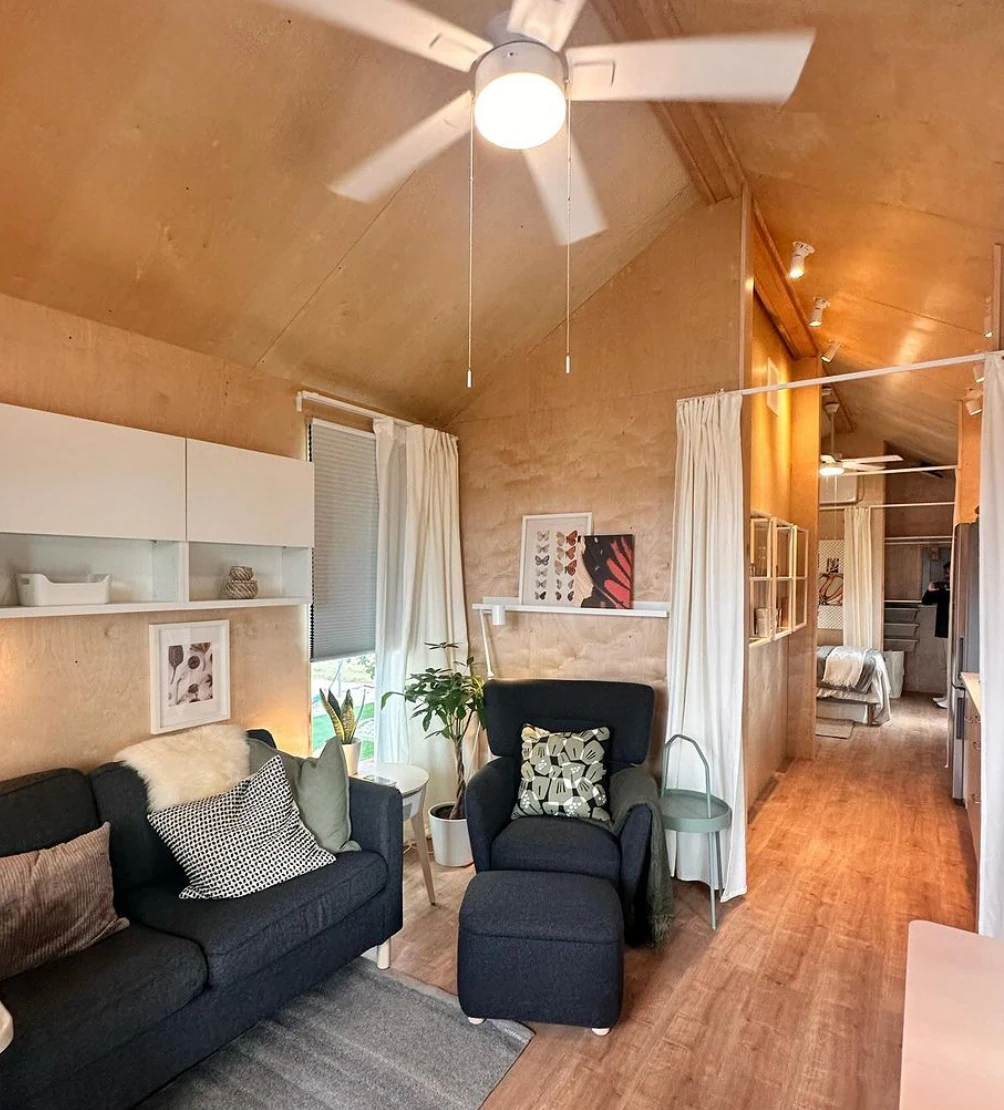
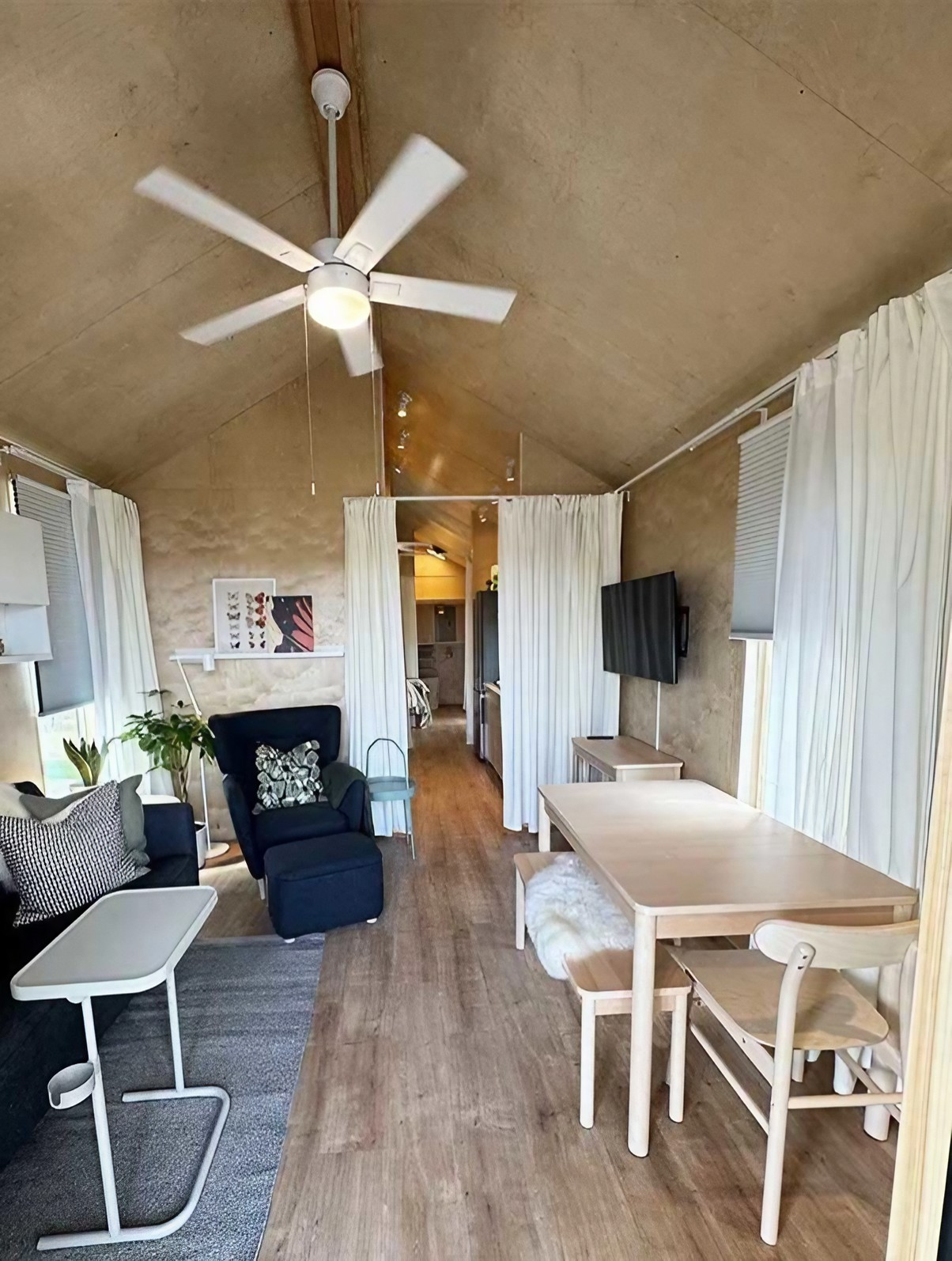
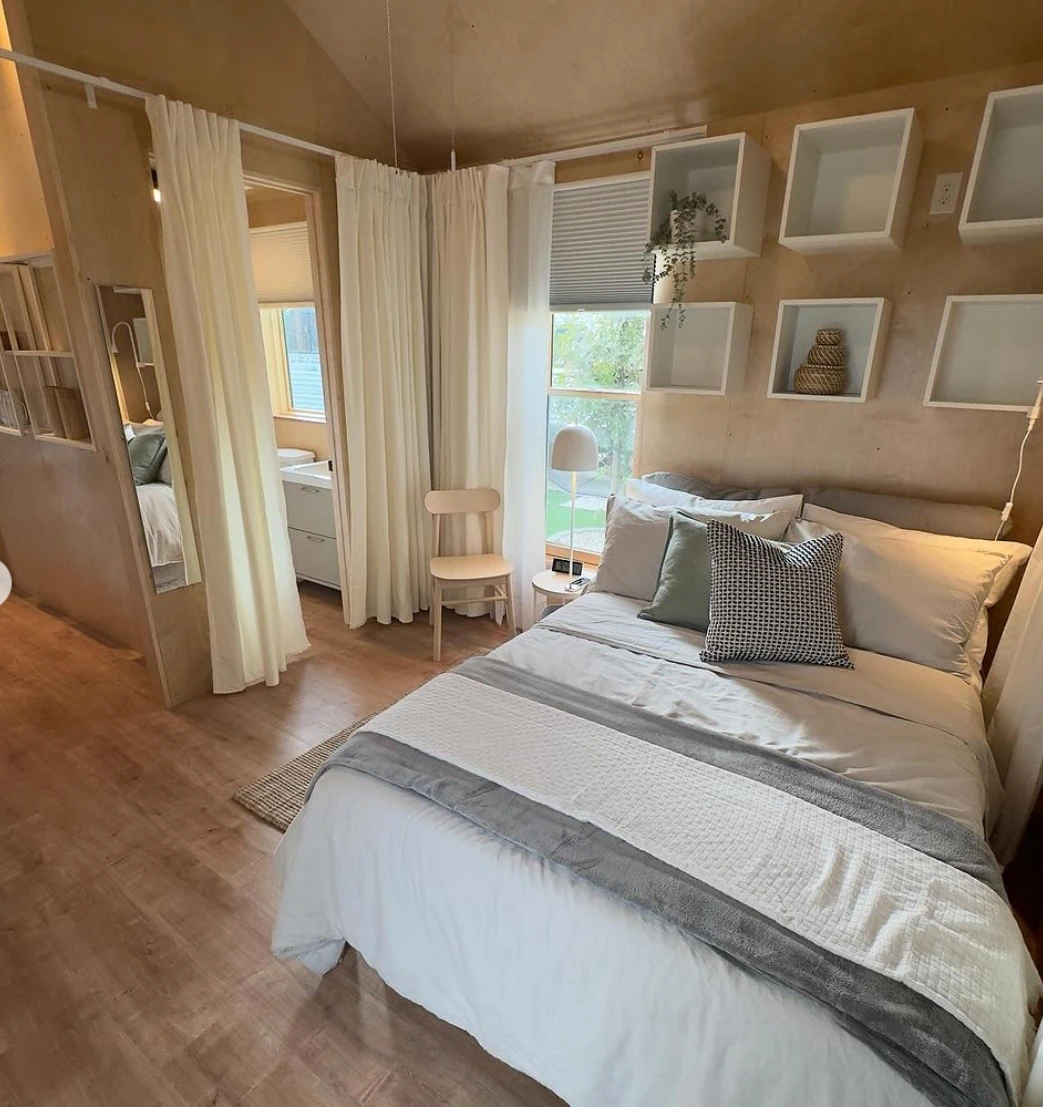
The IKEA tiny house is based on a single open floor plan — a multifunctional main room that serves simultaneously as a living room, bedroom, and dining area. The brilliance lies in the use of modular curtains that allow residents to create distinct zones as needed: a private sleeping area at night, an open and bright living space during the day.
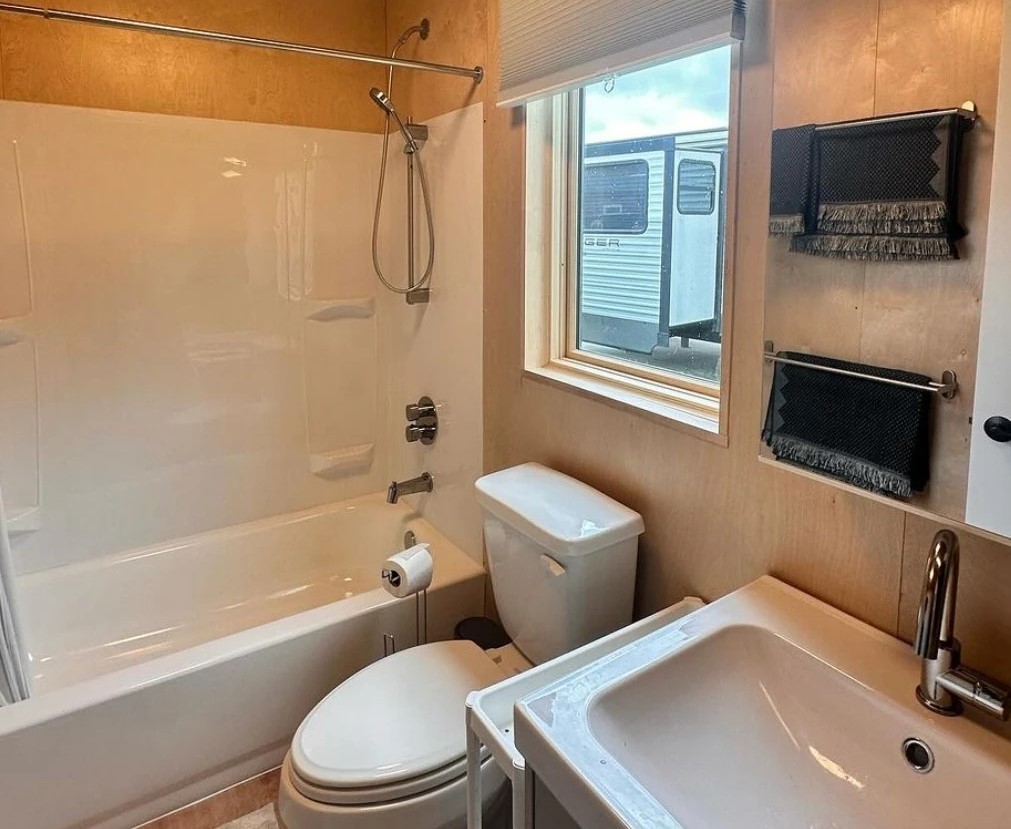
The bathroom is fully enclosed and constitutes the only truly separate room. Equipped with a bathtub — a deliberate choice to provide real comfort and a sense of normalcy — it offers all the privacy one could need. This detail may seem minor, but it's fundamental: in feedback from future residents, the ability to take a hot bath ranked among the most frequent requests.
Architectural Principles
- Modular open plan: a single space that transforms thanks to curtains and mobile furniture
- Maximized natural light: large windows to visually expand the space and reduce the need for artificial lighting
- Fluid circulation: no unnecessary hallways, every zone is directly accessible
- Enclosed bathroom: the only hard partition in the house, ensuring absolute privacy
- Climate adaptability: designed to withstand Texas summers while being transferable to other latitudes
Interior Layout: Every Square Meter Optimized
The interior layout of the IKEA tiny house is a masterclass in space optimization. Inspired by Scandinavian principles — simplicity, functionality, light — every element has been carefully thought out to maximize livability within a compact volume.
The Main Living Area
At the heart of the house lies a multipurpose space that serves as living room, bedroom, and dining nook all at once. Curtains mounted on ceiling rails allow residents to reconfigure this space depending on the time of day and their needs. In the morning, everything opens up for maximum light and spaciousness. In the evening, curtains are drawn to create an intimate sleeping area. This flexibility is the key to comfort in a small space.
The Kitchen
The kitchen area is designed with IKEA's well-known expertise in this domain. Compact yet functional, it features an optimized countertop, clever storage solutions, and all essential equipment for meal preparation. Vertical storage solutions and smart accessories — hooks, rails, open shelves — are quintessentially IKEA and keep the work surface clear despite the limited footprint.
The Bathroom
Fully enclosed for guaranteed privacy, the bathroom is a small haven in itself. It features a bathtub — a true luxury in a tiny house of this size — a sink, and storage. The choice to include a bathtub rather than just a shower demonstrates the attention paid to resident well-being and the project's philosophy: a small space should not mean small compromises on essential comfort.
IKEA Furniture: Functional, Lightweight, and Durable
True to its philosophy, IKEA furnished the tiny house with furniture specifically selected for small spaces. Every piece of furniture meets three essential criteria: lightness, mobility, and durability.
The furniture is designed to be easy to move, allowing residents to reconfigure their interior according to their needs. A sofa that transforms into a bed, a folding table that frees up space, stackable storage units — these are the kinds of solutions that have made IKEA famous and that truly come into their own in 366 square feet.
Durability is another strong point. Contrary to some stereotypes about IKEA furniture, the pieces chosen for this project are selected for their robustness and longevity. In social housing, furniture must withstand intensive daily use for years — and that is precisely what this selection aims to deliver.
Recommended IKEA Ranges for Small Spaces
- KALLAX: modular shelving units that double as storage and room dividers
- FRIHETEN: convertible sofa-bed with built-in storage
- NORBERG / NORRÅKER: wall-mounted folding tables to save floor space
- SKÅDIS: pegboards for organizing walls vertically
- PLATSA: customizable storage system that adapts to any space
Sustainability and Environmental Impact
The project is firmly aligned with IKEA's sustainability strategy. The Swedish company has committed to becoming "climate positive" by 2030, and this tiny house is a tangible illustration of that commitment.
Living in 34 m² naturally reduces your ecological footprint. Less surface area to heat and cool, fewer construction materials, less energy consumed daily. But the project's environmental ambitions go beyond simple compactness:
- Sustainable and responsible materials: selected for minimal environmental impact and longevity
- Energy efficiency: high-performance insulation and bioclimatic design that reduces heating and cooling needs
- Reduced carbon footprint: rapid construction and prefabrication that limits construction waste
- Resource conservation: fewer materials, less water, less energy across the entire life cycle
- Circularity: IKEA furniture designed to be repaired, reused, or recycled
Estimated Price and Affordability
One of the most anticipated aspects of this project is, of course, the price. IKEA has not yet communicated an official retail price for a potential consumer release, but several factors allow us to estimate costs.
The San Antonio pilot project targets a very low construction cost suited to social housing. For a commercial consumer version, industry experts estimate a price between $35,000 and $55,000 USD for the base structure and furnishing, excluding land and utility hookups (water, electricity, sewage).
Cost Estimate Breakdown for an IKEA-Type Tiny House
| Cost Item | Low Estimate | High Estimate |
|---|---|---|
| Structure and construction | $22,000 | $38,000 |
| IKEA furniture and fit-out | $3,500 | $9,000 |
| Utility hookups (water, electric, sewer) | $5,500 | $16,000 |
| Land (highly variable) | $10,000 | $150,000+ |
| Estimated total (excl. land) | $31,000 | $63,000 |
These estimates are indicative and vary considerably by state, region, and local building codes. Land prices are excluded as they depend entirely on location.
Comparison With Other Tiny Houses on the Market
The IKEA tiny house stands out primarily through its integrated approach: architecture, furniture, and layout are conceived as a cohesive whole, whereas most tiny houses require separate furnishing. This is a significant advantage for future owners seeking a turnkey solution.
Availability in the United States and Canada
The question many English-speaking readers are asking: can I buy the IKEA tiny house? The answer, for now, is not yet — at least not directly.
The pilot project is based in San Antonio, Texas, and IKEA has not yet announced plans for retail availability. However, several signs suggest that broader distribution is not out of the question:
- The North American housing crisis is creating growing demand for affordable housing solutions
- IKEA's massive North American presence would facilitate logistics and distribution
- The concept is designed to be replicable and adaptable to different contexts and climates
- Growing political will to address homelessness and housing affordability
Zoning and Regulations in the US
In the United States, tiny house regulations vary significantly by state, county, and municipality. Key considerations include minimum dwelling size requirements, foundation vs. wheels classification, and zoning restrictions. Some progressive states like Oregon, California, and Texas have adopted more permissive tiny house regulations. Always check your local building codes and zoning ordinances before planning a tiny house project.
In Canada
In Canada, regulations vary by province and municipality. British Columbia and Ontario have been among the most progressive in adapting building codes for alternative housing. Many municipalities still require minimum square footage, but the regulatory landscape is evolving rapidly as tiny houses gain mainstream acceptance. Consult your local planning department for specific requirements.
The Predecessor: The 17 m² IKEA Tiny House
This isn't IKEA's first foray into micro-housing. A few years ago, the brand made waves with a 17 m² (183 sq ft) tiny house designed in collaboration with the American company Escape. That model, smaller and designed to be mounted on wheels, demonstrated IKEA's ability to rethink living spaces within extremely constrained footprints.
The 17 m² tiny house served as a true ideas laboratory. Lessons learned from that first project — about proportions, circulation, storage, materials — directly informed the design of the 34 m² model. The new model shares the same philosophy of radical space optimization, but with double the floor area, it delivers a significantly higher level of comfort, notably thanks to the full bathroom with bathtub.
The jump from 17 to 34 m² is not insignificant: it crosses an important psychological and practical threshold. At 34 m², you move from a "survival" or temporary dwelling to a genuine permanent home where a single person or couple can live comfortably long-term.
Future Prospects and Development
The 200-home pilot project in San Antonio is just the beginning. If the model proves effective — and early feedback has been very encouraging — IKEA could consider a much larger-scale rollout.
Several development paths are taking shape for the future:
- Consumer retail: kit or turnkey sales through IKEA stores or online
- Regional variations: versions adapted to European, Asian, and other climates and building codes
- Size range: from a 20 m² studio to a 50 m² small family home
- Smart home integration: IKEA home automation (DIRIGERA range) for a connected living experience
- Municipal partnerships: collaboration with cities for social housing projects
- Tiny house villages: designing complete eco-neighborhoods around the concept
Frequently Asked Questions (FAQ)
The San Antonio pilot project targeted a very low construction cost for social housing. For a consumer version, industry estimates range between $35,000 and $55,000 USD for the base structure and furnishing, excluding land and utility hookups. IKEA has not yet announced large-scale commercialization.
Currently, the pilot project is located in San Antonio, Texas. IKEA has not yet announced retail availability. However, the concept is designed to be replicable, so wider availability remains possible. We update this page as soon as any official announcement is made.
The tiny house measures approximately 34 m² (about 366 square feet). It includes a modular main living area with curtain dividers, a full bathroom with bathtub, and an equipped kitchenette.
The house was designed in collaboration between IKEA U.S.'s sustainability department and the architecture firm WestEast Design Group, based in San Antonio, Texas. The design was created in consultation with future residents.
Yes, the house is equipped with IKEA furniture specifically selected for small spaces. The furniture is lightweight, easy to move, and durable. Curtains allow residents to reconfigure spaces according to their needs.
The project is part of IKEA's sustainability commitment. The compact 34 m² footprint naturally reduces the carbon footprint. Materials are chosen for durability and minimal environmental impact.
Requirements vary significantly by state and municipality. Most areas require a building permit for any permanent structure. Some states have adopted specific tiny house regulations that may simplify the process. Always check your local building codes and zoning ordinances before starting a project.
You can adopt the key principles: modular open plan with curtains, lightweight and multifunctional IKEA furniture, vertical storage, an enclosed bathroom, and maximized natural light. Visit an IKEA store to explore ranges designed for small spaces (KALLAX, PLATSA, FRIHETEN, etc.).